If you’ve ever opened a bag of coffee, spices, or herbs only to have the smell disappear within days, you already understand why odor control in packaging matters. Smell-proof pouches have become one of the most important innovations in flexible packaging, giving brands a reliable way to protect scent, freshness, and product integrity from the moment of packing until the moment of use.
At AttaPack, we specialize in designing and manufacturing smell-proof bags and custom pouches that combine functional odor barrier technology with attractive, brand-ready presentation. In this guide, we’ll break down exactly how smell-proof pouches work, what makes them effective, and why they’ve become essential across dozens of industries.
What Are Smell-Proof Pouches?
Smell-proof pouches are packaging solutions engineered with multi-layer barrier films designed to prevent odors from escaping and outside contaminants from getting in. Unlike standard plastic or paper bags, these pouches use specialized materials — often combining polyethylene, foil, and nylon layers — to create a near-impermeable seal against air, moisture, and scent molecules.
This makes them different from ordinary flexible packaging, which may protect against moisture or light but isn’t necessarily built to block odor transmission specifically. Smell-proof design is a targeted engineering goal, not a byproduct of standard packaging.
How Smell-Proof Pouches Actually Work
The “science” behind a smell-proof pouch comes down to three core elements:
1. Multi-Layer Barrier Construction
Most smell-proof bags aren’t made from a single material. They’re built from laminated layers — typically a combination of polyethylene (PE), polyethylene terephthalate (PET), and sometimes an aluminum foil or metalized layer. Each layer serves a purpose: one blocks moisture, another blocks light, and another creates the odor barrier itself by preventing gas and scent molecule migration through the film.
2. Heat-Sealed Construction
Even the best barrier material fails if the seams aren’t sealed properly. Smell-proof pouches rely on precise heat-sealing along every edge, eliminating micro-gaps where odor molecules could otherwise escape. This is why quality control during manufacturing is just as important as material selection.
3. Resealable Closures
Many smell-proof pouches include zippers, slider seals, or press-to-close mechanisms. These closures allow repeated opening and resealing without compromising the barrier — critical for products that aren’t used all at once, like coffee, dried herbs, or pet treats.
Together, these three elements create odor barrier packaging that keeps scent locked in and outside air locked out, preserving product freshness far longer than conventional packaging.
Why Smell-Proof Packaging Matters
Product Freshness and Shelf Life
Odor leakage is often a sign that oxygen and moisture are also getting in — both of which degrade product quality. A well-designed smell-proof bag protects taste, potency, and aroma simultaneously, extending shelf life significantly compared to standard packaging.
Compliance and Discretion
For regulated products, smell-proof packaging isn’t just a preference — it’s often a practical necessity for discreet, compliant shipping and storage. Businesses handling sensitive or regulated goods rely on odor barrier packaging to meet distribution and retail requirements.
Brand Trust and Customer Experience
When a customer opens a pouch and is met with the same fresh aroma they expected at the time of purchase, it reinforces perceived quality. Poor packaging that lets odor escape — or lets outside smells in — can damage a brand’s reputation, even if the product inside is high quality.
Environmental and Practical Considerations
Smell-proof pouches are also popular because they reduce the need for double-bagging or excessive secondary packaging. A single well-engineered pouch can do the job of multiple layers of inferior packaging, which can also reduce material waste over time.
Industries That Rely on Smell-Proof Pouches
While often associated with a few well-known product categories, smell-proof pouches are used far more broadly than people realize:
- Coffee and tea brands — preserving roast aroma and preventing staleness
- Spice and food producers — locking in flavor-critical volatile compounds
- Pet food and treats — maintaining freshness and appeal
- Nutraceuticals and supplements — protecting sensitive ingredients from air exposure
- Specialty and regulated products — where discretion and compliance are priorities
This versatility is exactly why demand for custom pouches with odor-barrier properties continues to grow across consumer packaged goods (CPG) industries.
Choosing the Right Smell-Proof Pouch for Your Product
Not all smell-proof pouches are built the same way, and the right choice depends on several factors:
- Material composition: Higher-barrier laminates (e.g., foil-lined) offer superior odor blocking compared to basic PE-only films, but may cost more per unit.
- Closure type: Zip-lock, slider, or heat-seal closures each offer different balances of convenience, reusability, and barrier strength.
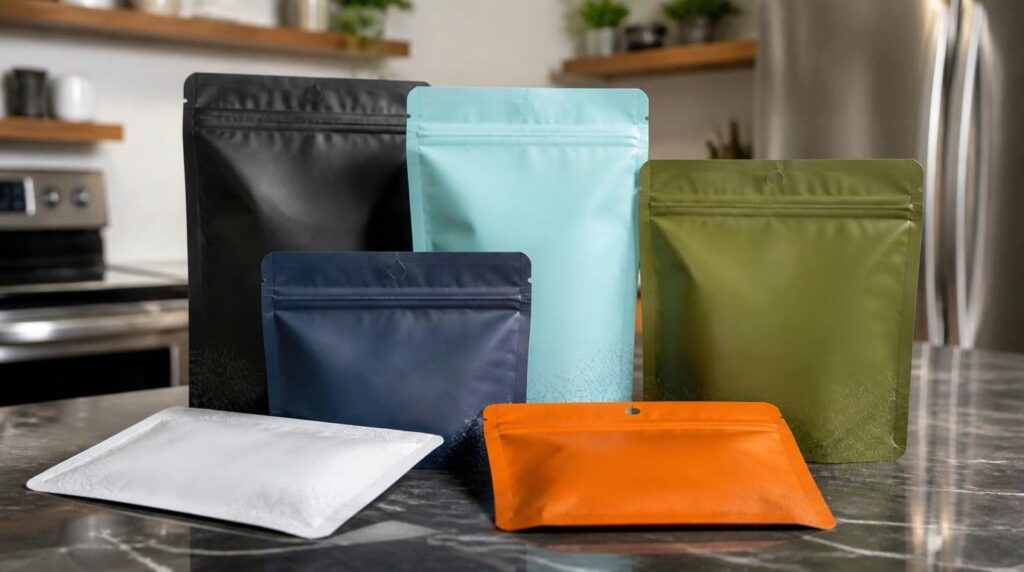
- Size and format: Stand-up pouches, flat pouches, and gusseted designs all affect shelf presentation and functional capacity.
- Printing and branding: Since smell-proof pouches are often the primary customer touchpoint, custom printing, matte or gloss finishes, and window cutouts can enhance shelf appeal without compromising the barrier function.
Why Choose AttaPack for Smell-Proof Packaging
At AttaPack, we combine material science expertise with custom design capabilities to produce smell-proof pouches that perform under real-world conditions — not just in a lab test. Our team works directly with brands to select the right barrier laminate, closure system, and print finish for their specific product, ensuring freshness, compliance, and shelf appeal all work together.
Whether you need small-batch custom pouches for a new product launch or large-scale odor barrier packaging for an established brand, our manufacturing process is built around precision sealing and consistent quality control — the two factors that matter most in true smell-proof performance.
Conclusion
Smell-proof pouches aren’t just about keeping scent contained — they’re a critical part of preserving product quality, building customer trust, and meeting industry-specific packaging requirements. By understanding the materials and engineering behind true odor barrier packaging, brands can make smarter packaging decisions that protect both their product and their reputation.
If you’re ready to explore custom smell-proof packaging solutions, AttaPack can help you design pouches that combine performance, compliance, and standout branding.
Frequently Asked Questions
1. What makes a pouch “smell-proof” instead of just airtight?
Airtight packaging blocks air exchange, but smell-proof packaging is specifically engineered to block odor molecules, which can be smaller and more diffusive than typical air particles. This requires specialized barrier layers, not just a tight seal.
2. Are smell-proof pouches reusable?
Many are, especially those with zip-lock or slider closures. However, repeated opening can gradually reduce barrier effectiveness over time, so product-specific storage guidance should still be followed.
3. Can smell-proof pouches be recycled?
It depends on the material composition. Multi-layer laminate pouches are harder to recycle through standard municipal programs, though mono-material recyclable options are becoming more available as sustainable packaging technology advances.
4. Do smell-proof pouches protect against moisture too?
Yes, in most cases. The same barrier layers that block odor transmission typically also provide strong moisture resistance, which is part of why these pouches extend shelf life so effectively.
5. How do I know which smell-proof pouch size or style fits my product?
It depends on your product’s weight, sensitivity to light/oxygen, and how customers will use it (single-use vs. resealable). A packaging partner like AttaPack can help match the right pouch structure to your specific product requirements.