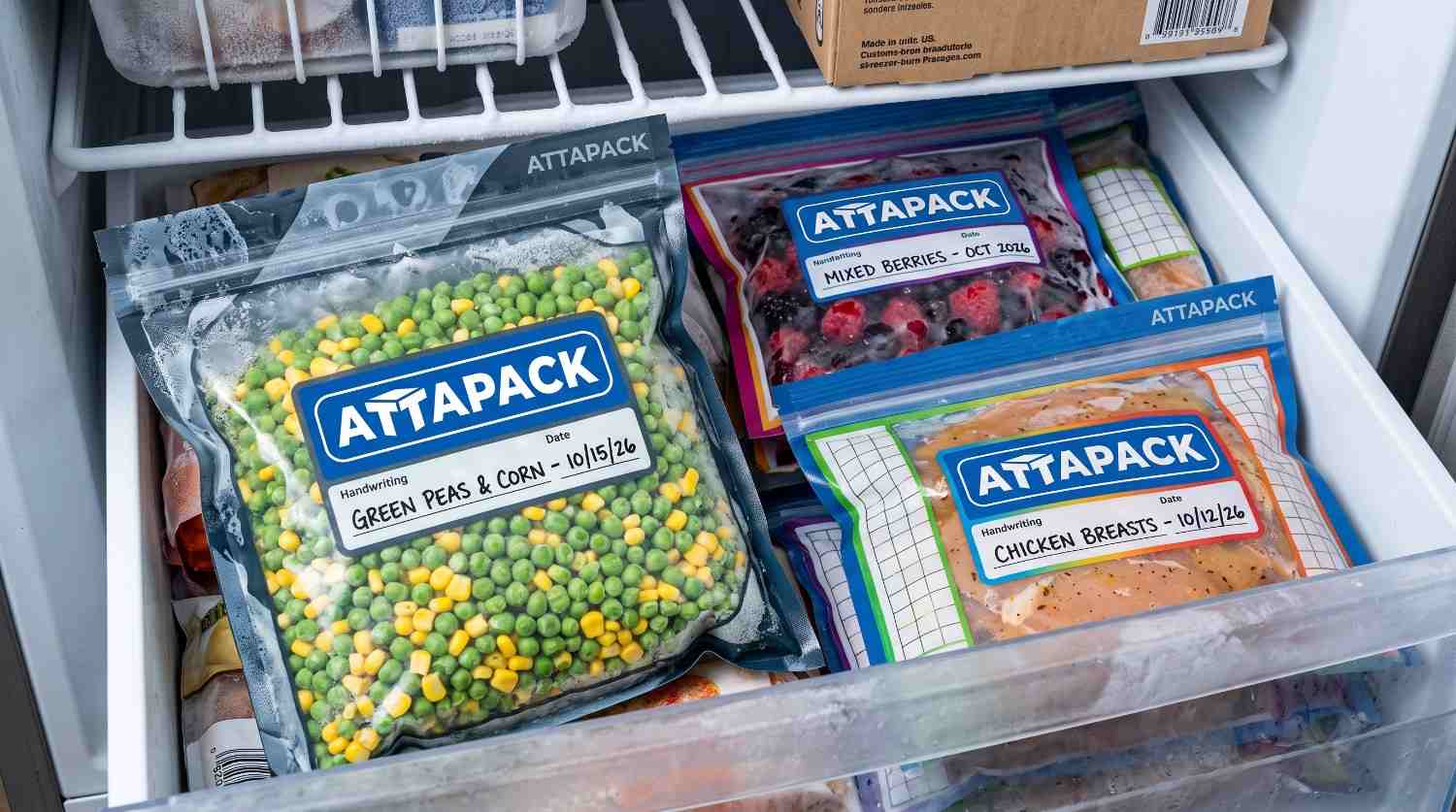
You open the freezer, pull out a pack of chicken or berries, and find dry, grayish patches covered in ice crystals. That is freezer burn. It will not make you sick, but it ruins taste, texture, and the reason you froze the food in the first place.
The good news is that freezer burn is mostly a packaging problem, and packaging problems can be fixed. The right freezer pouches create a strong barrier against air and moisture loss, so food stays fresh for months. This guide explains why freezer burn happens, what makes good freezer-safe packaging, and how to choose and use pouches properly, whether you are a home cook or a food brand.
What Is Freezer Burn and Why Does It Happen?
Freezer burn happens when frozen food loses moisture and comes into contact with air. Water inside the food turns to ice, and those ice crystals slowly escape into the dry freezer air through a process called sublimation. At the same time, oxygen reacts with the food’s surface and causes dull color and off flavors.
The USDA notes that freezer-burned food is safe to eat, but the quality drops. Meat turns tough and leathery, vegetables lose color, and ice cream develops a gritty texture.
Three things usually cause it:
- Air inside the package, which gives moisture a place to escape to
- Weak or thin packaging that lets oxygen and water vapor pass through
- Temperature swings, caused by frequent door opening or a freezer that is not kept at 0°F (-18°C)
Fix the packaging, and you fix most of the problem.
What Are Freezer Pouches?
Freezer pouches are flexible bags made from multi-layer barrier films designed to stay strong and sealed at very low temperatures. Unlike ordinary plastic bags, which turn brittle and crack in the cold, quality freezer pouches stay flexible and keep their seals intact.
They are widely used for:
- Frozen fruits and vegetables
- Meat, poultry, and seafood
- Ready meals, soups, and sauces
- Dumplings, samosas, parathas, and other frozen snacks
- Meal-prep portions and baby food
Because they are lightweight and take up less room than rigid containers, they also help you use freezer space more efficiently.
What Makes Good Freezer-Safe Packaging?
Not every bag labelled “freezer” performs the same. When you evaluate freezer-safe packaging, check these features.
1. Multi-Layer Barrier Film
The strongest pouches combine layers such as PET (strength and printability), a barrier layer (to block oxygen and moisture), and PE (heat-sealing and food contact). Together, they slow moisture loss far better than a single thin layer.
2. The Right Thickness
Thicker is not always better, but a very thin film punctures easily. Sharp items like bones, ice crystals, and frozen corners need a pouch with enough puncture resistance. Ask your supplier for micron or mil specifications instead of guessing.
3. A Reliable Seal
A pouch is only as good as its seal. Look for strong heat seals on commercial packs and a double-track or heavy-duty zipper on resealable ones. A weak seal lets air in, and air is what causes freezer burn.
4. Food-Grade, BPA-Free Materials
Food-contact materials should comply with the rules in your market, such as FDA requirements in the US. Always confirm compliance documents with your packaging supplier before you buy.
5. Low-Temperature Flexibility
The film should not crack when bent or stacked at freezer temperatures. This is one of the clearest differences between true freezer pouches and regular storage bags.
Types of Freezer Pouches
The best format depends on what you are freezing and how you will sell or store it.
Stand-up freezer pouches hold their shape on shelves and in freezer displays, which makes them popular for frozen fruit, snacks, and retail products. Our stand-up pouches work well for retail and bulk frozen food.
Flat (three-side seal) pouches are space-efficient for flat items like marinated meat, fish fillets, and portioned meals. See our range of flat pouches.
Zipper pouches let you open and reseal the pack, which is useful for items you do not use all at once. Check our resealable zipper pouches.
Vacuum pouches remove air completely and give the longest protection for raw meat, fish, and long-term storage. Browse our vacuum pouches.
Quad seal pouches are a strong choice for premium frozen products because they stand upright with a tidy, box-like look. Read our guide on quad seal pouches to see if they suit your product.
How to Keep Frozen Food Fresh: Step-by-Step
Good pouches help, but how you use them matters just as much. These steps come from standard food-safety guidance and common kitchen practice.
1. Cool food first. Never put hot food straight into a pouch. Let cooked food cool, then chill it in the fridge before freezing. Warm food creates steam and condensation inside the pack.
2. Portion before you pack. Divide food into the amounts you will actually use. Smaller portions freeze faster, thaw faster, and avoid repeated thawing and refreezing, which damages quality.
3. Remove as much air as possible. Press the pouch flat, squeeze out the air, and seal it. For best results, use a vacuum sealer or the water displacement method: lower the open pouch into water, let the pressure push the air out, then seal just above the waterline.
4. Freeze flat. Lay pouches flat on a tray until solid. They stack neatly, freeze quicker, and thaw evenly.
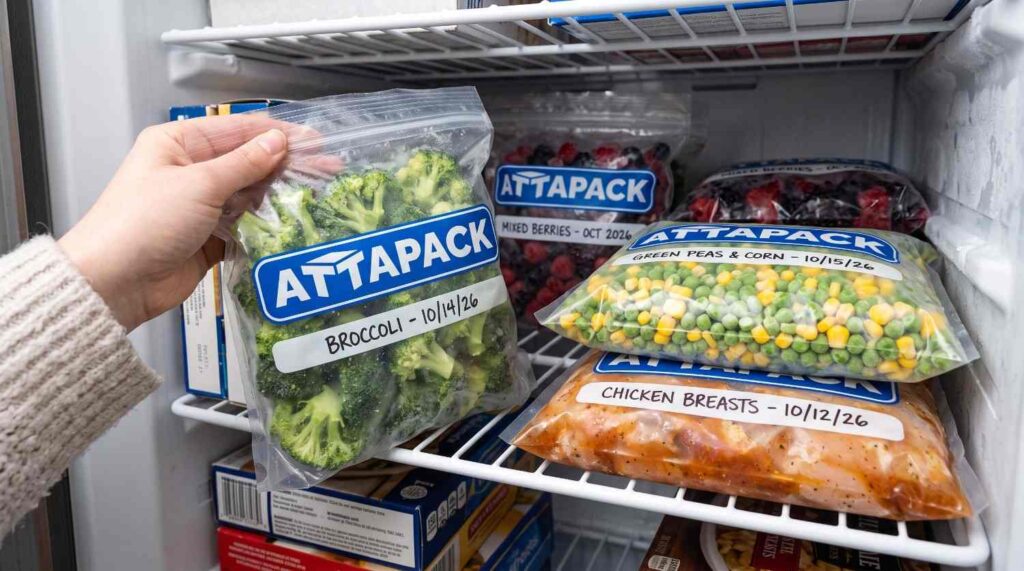
5. Label everything. Write the contents and date with a permanent marker. Use older pouches first.
6. Keep the freezer at 0°F (-18°C). Use a freezer thermometer, and avoid overpacking, which blocks airflow.
7. Thaw safely. Thaw in the refrigerator, in cold water, or in the microwave if you will cook right away. Do not leave food on the counter.
Recommended Storage Times
These are general quality guidelines. Food stays safe indefinitely at 0°F, but taste and texture decline over time.
| Food | Best Quality Window |
| Raw beef and lamb | 6-12 months |
| Raw chicken (pieces) | 9 months |
| Fish | 3-6 months |
| Cooked meals and soups | 2-3 months |
| Fruits and vegetables | 8-12 months |
| Bread and baked items | 2-3 months |
Frozen Food Packaging for Brands and Businesses
If you sell frozen products, your frozen food packaging is part of your product quality. A pouch that fails in the cold shows up as leaks, ice build-up, and customer complaints.
Here is what to check before you place a bulk order:
- Barrier performance. Ask for oxygen and moisture transmission data for the film structure.
- Seal strength testing. Request samples and test them in real freezer conditions, not only at room temperature.
- Drop and stack tests. Pouches must survive transport, cold storage, and display.
- Print quality in the cold. Condensation should not smear or fade your branding.
- Custom features. Tear notches, hang holes, zippers, and clear windows should be placed so they do not weaken the seal.
- Compliance. Confirm food-contact documentation for your target market.
Testing a small batch with your actual product, whether it is wet, oily, sharp-edged, or full of moisture, will tell you more than any spec sheet. If you want help matching a structure to your product, our team can guide you through custom printed pouches.
Common Freezer Pouch Mistakes to Avoid
- Using regular sandwich bags for long-term freezing
- Leaving air trapped in the bag
- Overfilling so the seal cannot close properly
- Freezing hot or steaming food
- Refreezing food that has fully thawed
- Stacking sharp items without protecting the film
Avoiding these simple mistakes can add months to your food’s best quality life.
Why Packaging Experience Matters
Freezing is not one-size-fits-all. A pouch for frozen blueberries has different needs than one for marinated chicken or oily curry. Choosing a supplier with hands-on experience in food packaging helps you avoid expensive trial and error. Look for a partner who asks about your product, fill temperature, shelf life target, and distribution method before recommending a structure. That is the sign of real packaging expertise.
Final Thoughts
Freezer burn is not inevitable. With the right freezer pouches, proper air removal, a steady freezer temperature, and good labelling, you can keep frozen food fresh, flavorful, and safe for months. For brands, investing in tested, high-barrier frozen food packaging protects both your product and your reputation.
Ready to find the right pouch for your frozen products? Contact Attapack for samples and expert guidance.
Frequently Asked Questions
Are freezer pouches better than freezer containers?
For most foods, yes. Pouches let you remove more air, take up less space, freeze faster when laid flat, and conform to the shape of the food. Rigid containers are better for liquids you want to stack or foods that must not be crushed.
Can I use regular zipper bags in the freezer?
Thin sandwich bags are not designed for long-term freezing and often allow air and moisture through. Use bags or pouches specifically rated for freezer use, with thicker film and a strong closure.
Is freezer-burned food safe to eat?
Yes. According to the USDA, freezer burn affects quality, not safety. You can trim away dry areas before cooking, though the texture may still be less pleasant.
How long does food last in freezer pouches?
Properly sealed food stays safe indefinitely at 0°F (-18°C), but best quality varies by food, from about 2-3 months for cooked meals to 12 months for many raw meats and vegetables.
Can freezer pouches go in the microwave or boiling water?
Only if the manufacturer specifically says so. Many standard freezer pouches are not microwave-safe or boil-safe, so always check the product specifications before heating.
What material should frozen food pouches be made from?
Look for multi-layer, food-grade laminates with a barrier layer, such as PET/PE or similar structures. The correct choice depends on your product, so confirm it with your supplier.
Can freezer pouches be customized with my branding?
Yes. Pouches can usually be printed with your logo, product details, and cooking instructions, and can include features like zippers, windows, and tear notches.