A successful trade show booth does more than showcase products. It captures attention, encourages visitors to stop, and creates opportunities for meaningful conversations with potential customers. With dozens or even hundreds of exhibitors competing for attention, an effective booth design can make a significant difference in how people interact with your brand.
Trade show booth design plays an important role in attracting foot traffic, communicating your brand message, and turning casual attendees into qualified leads. From eye-catching graphics to interactive displays and thoughtful product placement, every design element should serve a purpose.
Whether you are exhibiting at an industry event, launching a new product, or building brand awareness, the right approach to booth design can help you stand out. This guide explores practical trade show booth ideas, display strategies, and design principles to help you create an engaging and memorable exhibition space.
1. Start With a Clear Booth Design Goal
Before choosing colors, graphics, or display materials, decide what you want your booth to achieve. Are you introducing a new product, generating leads, demonstrating a service, or building brand awareness?
Your goal should guide every design decision. For example, a product launch may require a prominent product display, while a lead-generation booth may benefit from an open layout and a dedicated conversation area.
Understanding your target audience is equally important. Consider what attendees are looking for, what problems they want to solve, and what would make them stop at your booth. When your design speaks directly to their needs, it becomes easier to attract relevant visitors instead of simply increasing general foot traffic.
2. Make Your Booth Visually Stand Out
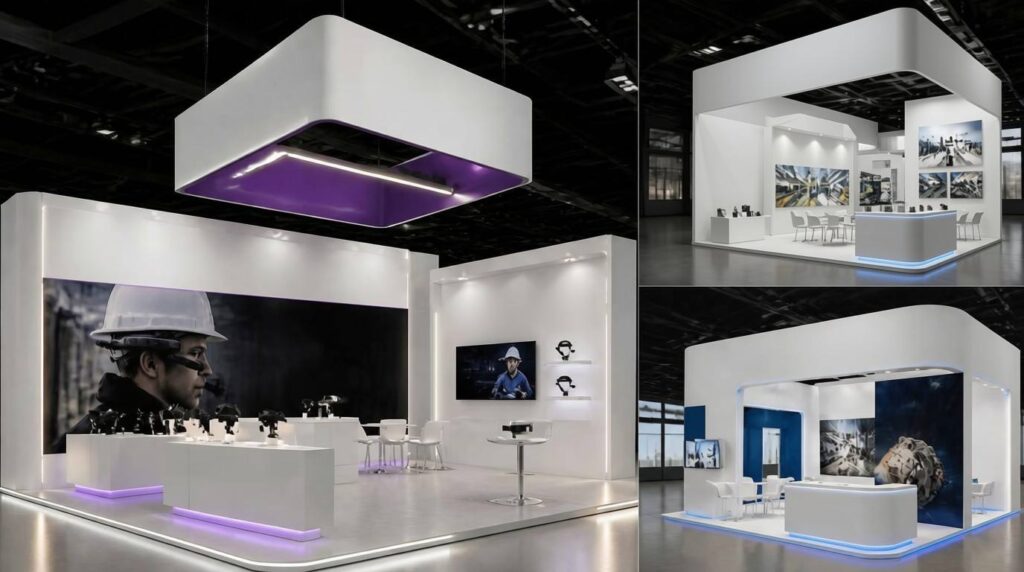
Visual appeal is one of the first things attendees notice when walking through an exhibition hall. Strong colors, clear branding, and well-designed graphics can help your booth stand out from surrounding exhibitors.
Use your brand colors consistently across the backdrop, banners, display counters, and promotional materials. Choose high-quality visuals that communicate your products or services without overwhelming visitors with information.
Your main headline should be short, clear, and readable from a distance. Rather than filling the booth with paragraphs, focus on a compelling message that explains what your business offers and why it matters.
Lighting can also enhance your display. Backlit graphics, LED accents, and focused product lighting help highlight important areas and create visual depth. The goal is to make your booth noticeable while keeping the overall presentation professional and easy to understand.
3. Use Custom Trade Show Displays to Strengthen Your Brand
Well-planned custom trade show displays help businesses create a consistent brand experience while making the most of their exhibition space. Instead of relying on generic display materials, you can use customized graphics, branded panels, and display structures that reflect your company’s identity.
Choose display elements based on your booth size, event goals, and the products you want to feature. For example, a branded backdrop can establish a strong visual presence, while a custom display counter can provide a convenient space for product samples, brochures, or demonstrations.
For businesses exhibiting at multiple events, reusable and modular display systems can provide flexibility. You can update graphics or rearrange components to suit different booth layouts without redesigning the entire setup each time.
Printed materials also contribute to a cohesive exhibit. Coordinating your booth graphics with your packaging, product labels, and promotional materials helps visitors recognize your brand across different touchpoints. Commercial printing solutions can be explored when planning printed brand materials for your marketing needs.
4. Keep the Booth Layout Open and Easy to Navigate
Even an attractive booth can lose potential visitors if the layout feels crowded or difficult to enter. A well-organized booth should make it easy for attendees to approach, explore, and interact with your team.
Avoid placing large tables or display counters directly across the entire entrance. Instead, position furniture along the sides or toward the back, leaving enough room for visitors to step inside comfortably.
Divide your booth into simple functional areas, such as a welcome zone, product demonstration area, and conversation space. Keep walkways clear and make sure your most important products or visuals are visible from the aisle.
An open layout is particularly useful for smaller booths, where every square foot matters. Thoughtful placement of displays and furniture helps create a more spacious and inviting experience without requiring a larger exhibition space.
5. Use Interactive Trade Show Booth Ideas to Engage Visitors
Visitors are more likely to engage when they have something interesting to see, try, or experience. Interactive elements can turn a simple booth visit into a memorable brand experience.
Here are several trade show booth ideas to consider:
- Live product demonstrations: Show how your product works and explain its practical benefits.
- Touchscreen displays: Let attendees explore product features, catalogs, or service information.
- Product sampling: Allow visitors to experience your products firsthand.
- Games and contests: Use short activities or giveaways to encourage participation.
- QR code experiences: Direct visitors to product pages, digital brochures, or sign-up forms.
Choose interactive features that align with your audience and business goals. An activity should support your brand message rather than distract from it. Keep participation simple and avoid creating bottlenecks that prevent other attendees from approaching your booth.
6. Choose Booth Graphics and Messaging Carefully
Your booth graphics should communicate your brand’s value quickly. Attendees may only glance at your exhibit while walking through the hall, so the most important information needs to be easy to understand.
Focus on one primary message, supported by a few concise benefits. Use readable fonts, high-resolution images, and a clear visual hierarchy. Place your company name and core message where they can be seen from the aisle.
Avoid overcrowding your booth with too many logos, product descriptions, or promotional claims. If visitors need to stop and read several paragraphs to understand what you offer, your messaging may need to be simplified.
Consistency is equally important. Your booth graphics, brochures, banners, and other marketing materials should share a recognizable visual identity. AttaPack’s commercial printing services include banners, signs, table covers, and trade show booth materials that can help businesses maintain a cohesive presentation.
7. Use Strategic Lighting to Highlight Key Areas
Lighting can help direct attention toward important products, graphics, and demonstrations. A well-lit booth also creates a welcoming environment that encourages visitors to take a closer look.
Use spotlights to emphasize featured products, backlighting to enhance graphics, and subtle accent lighting to add depth to your display. Make sure the lighting complements your brand colors and does not create glare on screens or reflective surfaces.
The goal is to create a balanced visual experience. Excessively bright or flashing lights may distract attendees, while poorly lit displays can make your booth difficult to notice in a busy exhibition hall.
8. Make Your Booth Staff Part of the Experience
Your booth staff is just as important as the physical design. Even the most creative display may struggle to attract visitors if the team appears disengaged or unapproachable.
Train staff to greet attendees naturally, ask relevant questions, and explain your products or services clearly. Encourage team members to stand where they can welcome visitors without blocking the entrance.
Avoid overwhelming attendees with aggressive sales pitches. Give them room to explore, answer questions when needed, and guide interested visitors toward demonstrations or deeper conversations.
A knowledgeable, approachable team helps turn initial curiosity into meaningful business relationships.
9. Plan Your Booth Around Your Budget and Space
Effective trade show booth design does not always require a large exhibition space or an expensive custom build. The key is to prioritize the elements that matter most to your audience and objectives.
| Booth size or type | Design approach |
| Small inline booth | Use a bold backdrop, vertical displays, and an open entrance. |
| Medium booth | Add a demonstration area and a dedicated product display. |
| Large island booth | Create multiple engagement zones with clear visitor pathways. |
| Reusable modular booth | Use adaptable display components and updateable graphics. |
Before finalizing your design, confirm the event’s booth dimensions, height restrictions, electrical requirements, and installation guidelines. Planning these details early can help prevent last-minute changes and unnecessary expenses.
10. Measure Booth Performance After the Event
A successful exhibition is not measured by appearance alone. Tracking booth performance helps you understand whether your design attracted the right audience and supported your business goals.
Record the number of meaningful conversations, qualified leads, product demonstrations, and follow-up meetings generated during the event. If possible, compare these results with previous exhibitions to identify what worked well.
Ask your booth staff which displays attracted the most attention and where visitors seemed to lose interest. Attendee feedback can also reveal whether your messaging was clear and whether the booth was easy to navigate.
Use these insights to improve future booth layouts, graphics, and engagement strategies. Small, data-informed adjustments can help make each exhibition more effective.
Conclusion
Designing a booth that attracts foot traffic requires a combination of strong visuals, clear messaging, thoughtful layouts, and engaging experiences. By focusing on visitor needs and making your booth inviting, you can encourage more attendees to stop, explore, and connect with your brand.
From custom trade show displays to interactive demonstrations, every element should contribute to a consistent and memorable experience. With careful planning, the right materials, and a well-prepared team, businesses can create exhibition spaces that attract attention and support long-term marketing goals.
AttaPack offers commercial printing and trade show display solutions to help businesses bring their branded event materials to life.
Frequently Asked Questions
1. What makes a trade show booth design effective?
An effective trade show booth design combines clear branding, eye-catching graphics, an open layout, and engaging elements. It should communicate your brand’s value quickly and make it easy for visitors to approach and interact with your team.
2. How can I attract more visitors to my trade show booth?
Use bold signage, interactive demonstrations, product samples, and an inviting layout. Train your booth staff to engage attendees naturally and make sure your main message is visible from the aisle.
3. Are custom trade show displays worth the investment?
Custom trade show displays can help businesses maintain consistent branding, showcase products effectively, and adapt their exhibits to different events. Reusable or modular displays may also offer flexibility for companies attending multiple trade shows.
4. What are some creative trade show booth ideas for small businesses?
Small businesses can use branded backdrops, vertical banners, interactive product demonstrations, QR codes, and compact display counters. An uncluttered layout and a clear message can help a small booth stand out without requiring a large budget.
5. How do I measure the success of my trade show booth?
Track qualified leads, meaningful conversations, product demonstrations, follow-up meetings, and visitor engagement. Comparing these metrics across events can help you understand which booth elements are contributing to your marketing goals.