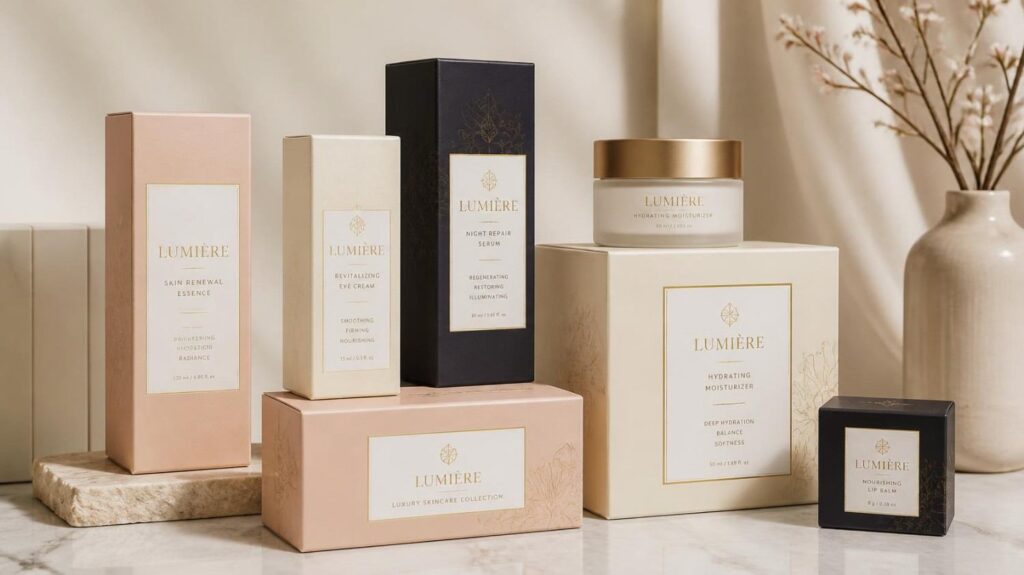
Cosmetics packaging boxes are the printed cartons or rigid boxes that hold and protect beauty products such as serums, creams, lipsticks and palettes. Effective cosmetic packaging design combines the right box structure, material, colors, typography and finishes so the box protects the product, displays required information and reflects your brand.
Key Takeaways
- Choose the box type first: folding cartons for volume, rigid boxes for premium sets.
- Match the insert to the product and test with the real filled item.
- Use one focal point, a controlled palette and readable type.
- Specify Pantone colors and approve a proof before production.
- Confirm labeling rules for every market you sell in.
Packaging is often the first thing a customer touches. Before they try a serum or lipstick, they judge the box: its weight, color, print quality and how easily it opens. A cosmetic boxes has to do three jobs at once: protect the product, communicate the brand and carry the information buyers need. This guide covers the design and production decisions that matter most, from box types and inserts to printing, finishes, labeling and cost.
1. Pick the Right Box Type
Structure is your first decision because it affects protection, cost and how premium the product feels.
| Box type | Best for | Key trait |
|---|---|---|
| Folding carton (tuck-end) | Serums, creams, lipsticks, retail volume | Lightweight, economical, ships flat |
| Sleeve box | Skincare sets, palettes | Clean look, easy to open |
| Rigid (setup) box | Gift sets, premium palettes | Sturdy, structured, premium |
| Magnetic-closure box | Luxury kits, PR mailers | Reusable, high-end feel |
| Window box | Makeup where color should show | Displays the product |
Folding cartons are the most cost-efficient option for larger volumes. Rigid boxes cost more but suit gift sets and luxury cosmetic packaging. Explore our custom cosmetic boxes, or compare folding cartons and rigid boxes before deciding.
2. Match the Insert to the Product
An insert holds the product still and shapes the unboxing. Paperboard inserts suit lightweight items such as lip products and are easy to recycle. Molded pulp works well for bottles and jars and supports plastic-free positioning. EVA foam gives the most cushioning for fragile glass and premium sets, but it is harder to recycle. Always test the fit with the real, filled product rather than an empty sample.
3. Build Brand Identity and a Clear Hierarchy
Decide what the brand should say first: luxury, natural, clinical or playful. Then keep logo position, typography and color system consistent across your range so products read as one family.
On the front panel, limit content to the logo, product name, product type, one key benefit and a supporting visual. Use a highly readable typeface for ingredients and directions, and save decorative fonts for the brand name. Design around one focal point, because crowded panels weaken every message on them.
4. Use Color With Purpose
- Soft neutrals: clean and sophisticated.
- Black with metallic accents: premium positioning.
- Pastels: gentle, skincare-focused products.
- Green and earthy tones: natural or botanical brands.
- Bold colors: trend-led, younger audiences.
Keep the palette to two or three main colors and check contrast so small text stays legible. Colors also shift between screen and print, which is why the next step matters.
5. Get Printing Right
Offset printing offers the best color consistency and value at higher volumes. Digital printing suits short runs, seasonal editions and design testing. Specify Pantone (spot) colors for brand colors that must match exactly, since CMYK can vary slightly between runs. Request a dieline and a digital proof, and for larger orders approve a physical sample before production.
6. Choose Materials for Sustainable Cosmetic Packaging
Common options include SBS paperboard for bright print and clean finishes, kraft board for a natural look, and rigid greyboard wrapped in specialty paper for premium boxes.
If sustainability is part of your brand, look for recycled content and FSC-certified board, right-size the box to avoid empty space, and use plastic-free inserts where possible. Keep claims specific, such as “made with FSC-certified paperboard,” rather than vague terms like “eco-friendly,” and make sure you can document them. Sustainability should never come at the cost of protection, because a damaged product creates more waste than a slightly heavier box.
7. Use Finishes Where They Count
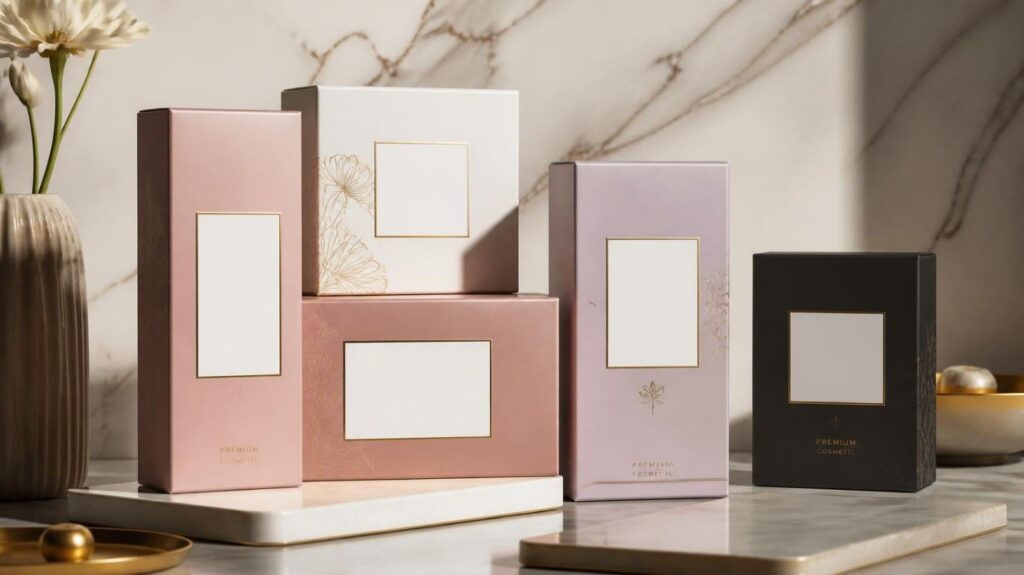
Foil stamping, embossing, debossing, spot UV, soft-touch lamination and matte or gloss coatings can all lift a design. The common mistake is using all of them. Choose one or two that support your positioning, such as foil on the logo or spot UV on a pattern. Soft-touch matte with a single foil detail is a classic approach to luxury cosmetic packaging. Remember that more finishes also mean higher cost and longer lead times.
8. Adapt the Design to the Product Category
- Skincare: clean layouts with space for ingredients and claims; protect glass droppers.
- Makeup: show shade clearly through color coding or a window; palettes need firm inserts.
- Fragrance: heavier, structured boxes, often rigid or magnetic.
- Haircare: larger formats with durable, moisture-resistant coatings.
9. Include Required Information
Beauty packaging must carry more than branding. In the US, the FDA cosmetics labeling guide covers product identity, net quantity, ingredient declaration, warnings and business details, with rules on placement and type size. Other markets have their own requirements, such as the EU Cosmetics Regulation (EC) No 1223/2009. Confirm the rules for every market you sell in, and plan the layout for required text first, then design around it.
10. Design for Unboxing, E-commerce and Retail
Many products sell in stores and online, so the box needs to work in both. On a shelf it must be recognizable from a distance; online it must stay clear as a small thumbnail. Make sure the product does not shift in shipping, and plan the opening sequence with a tidy insert, a printed inner panel or a simple card. Photograph the box from several angles, since customers often share unboxing moments on social media.
What Affects the Cost and MOQ of Custom Cosmetic Boxes?
Cost per box depends on size, structure, board type, number of print colors, finishes, inserts, and quantity. Folding cartons generally have lower minimums than rigid boxes, and MOQs vary widely between manufacturers, so request quotes at several quantities. Digital printing lowers minimums for short runs, while offset reduces the unit price as volume grows. Complex finishes and rigid construction extend lead times, so allow time for proofing and sampling.
How to Choose a Cosmetic Packaging Manufacturer
- Ask for physical samples and examples of previous cosmetic work.
- Confirm the dieline, proofing and approval process.
- Compare MOQs, lead times and quality-control checks.
- Request material and FSC documentation if you make sustainability claims.
- Check shipping options for every market you serve.
Before approving production, test a prototype for color accuracy, text readability, product fit, structural strength and opening experience. Ask a few people from your target audience what they notice first.
Final Thoughts
Great packaging looks right, works properly and communicates clearly. Start with your customer and brand positioning, then choose the structure, materials, colors, finishes and information layout that support them. Ready to develop your own range? Explore our custom cosmetic boxes or request a free quote and we will help you turn your design into production-ready packaging.
FAQs About Cosmetics Packaging Boxes
What are cosmetics packaging boxes?
Cosmetics packaging boxes are printed cartons or rigid boxes that hold and protect beauty products such as skincare, makeup, fragrance and gift sets. They also carry branding, ingredients, directions, warnings and other required information, and shape the customer’s first impression and unboxing experience.
What is the best material for cosmetic boxes?
It depends on the product and brand. SBS paperboard gives bright print and smooth finishes for folding cartons, kraft board suits, natural brands, and rigid greyboard wrapped in specialty paper suits premium gift sets. Choose by product weight, shipping needs, print quality and sustainability goals.
What is the difference between a folding carton and a rigid box?
A folding carton is made from printed paperboard that ships flat and costs less per unit, making it ideal for retail volumes. A rigid box uses a thick board wrapped in paper, is sturdier and feels more premium, but costs more and takes more storage space.
What is the MOQ for custom cosmetic boxes?
MOQs vary by manufacturer, box type and printing method. Folding cartons usually have lower minimums than rigid boxes, and digital printing can reduce minimums for short runs. Ask suppliers for quotes at several quantities to compare unit price against total spend.
How much do custom cosmetic boxes cost?
Cost depends on size, structure, material, number of print colors, finishes, inserts and order quantity. Larger runs lower the price per box, while foil, embossing and rigid construction raise it. Request itemized quotes so you can see what each feature adds.
How can I make cosmetic packaging look luxurious?
Use a restrained color palette, strong typography, quality board and precise construction. Add one or two finishes, such as foil on the logo or soft-touch lamination, rather than every option. A well-fitted insert also makes a big difference to perceived quality.
What information must go on cosmetic packaging?
Requirements depend on the market. In the US, packaging generally needs product identity, net quantity, ingredients, warnings where applicable and business details. The EU, UK and Australia have separate rules, so check the regulations for each country where you sell.
How do I make cosmetic packaging more sustainable?
Right-size the box, use recycled or FSC-certified paperboard, choose plastic-free inserts where possible and avoid unnecessary layers. Keep claims specific and documented, and make sure the packaging still protects the product during shipping.