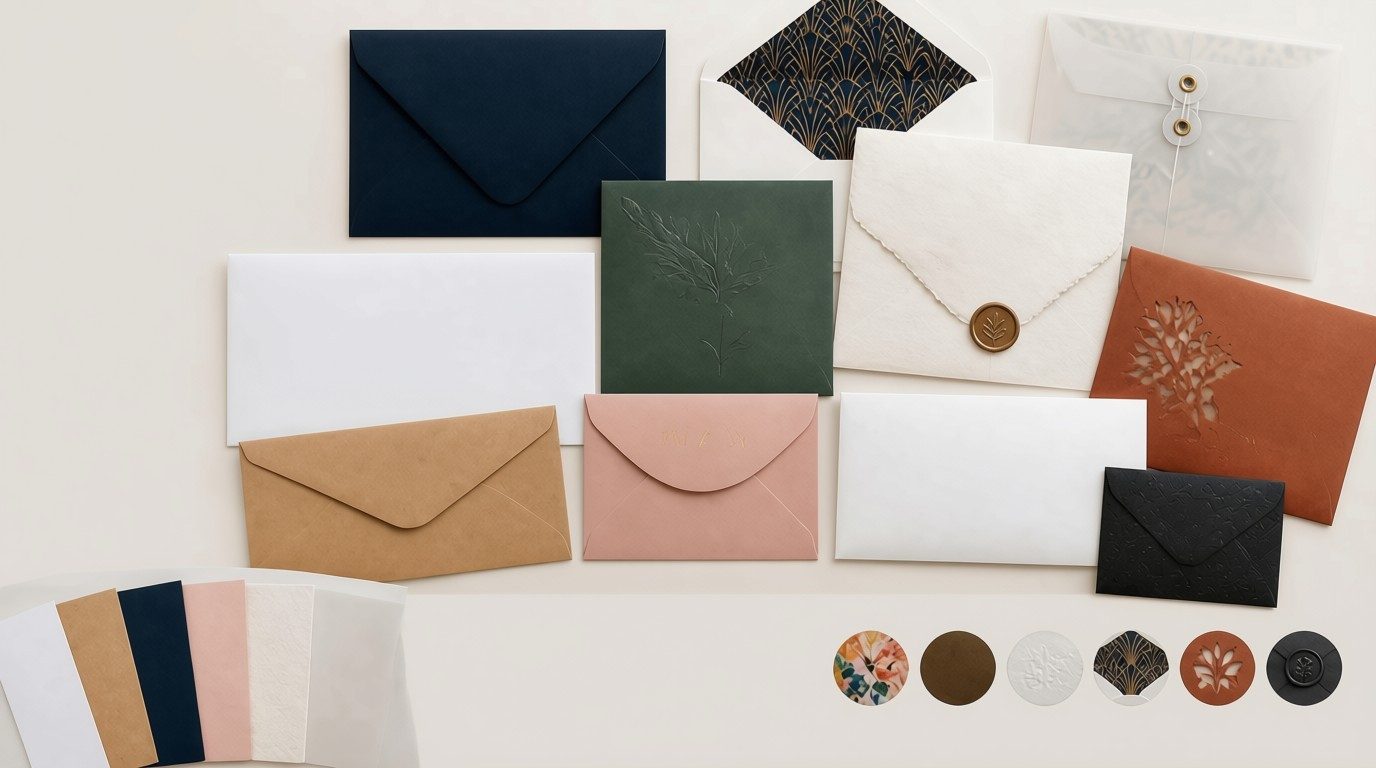
Envelopes are more than simple mailing supplies. They represent your brand before a customer even opens your letter. Whether you’re sending invoices, business proposals, promotional offers, or event invitations, the right envelope can make your communication look professional and memorable.
Custom envelope printing allows businesses to add logos, brand colors, return addresses, marketing messages, and other design elements to their envelopes. By choosing the right size, material, and printing style, you can create envelopes that meet your practical mailing needs while reinforcing your brand identity.
In this guide, we’ll explore common envelope sizes, available materials, printing methods, customization options, and tips for choosing the right envelopes for your business.
What Is Custom Envelope Printing?
Custom envelope printing is the process of producing envelopes with personalized designs, branding, and business information. Instead of using plain stationery, businesses can create envelopes that match their visual identity and communication goals.
Depending on your requirements, printed envelopes may include:
- Company logos and brand colors
- Return addresses and contact information
- Promotional messages and campaign artwork
- QR codes or website addresses
- Custom graphics, patterns, and typography
These envelopes are useful for companies of all sizes, from small businesses sending invoices to larger organizations managing direct mail campaigns.
AttaPack offers envelope printing options for business correspondence, window envelopes, direct mail, and special occasions. Explore the custom envelope printing to learn more about available solutions.
Why Do Businesses Use Custom Printed Mailing Envelopes?
Well-designed envelopes can support both everyday business communication and marketing activities.
1. Build brand recognition
Consistent use of logos, colors, and typography helps recipients recognize your company. When your envelopes match your letterheads, packaging, and other marketing materials, your overall brand identity becomes more cohesive.
2. Create a professional first impression
Branded envelopes make business correspondence look organized and intentional. They can be especially useful for proposals, contracts, invoices, customer statements, and corporate invitations.
3. Support direct mail campaigns
Promotional envelopes provide space for campaign branding and carefully selected messaging. They can be used for product announcements, seasonal offers, catalogs, and customer outreach.
4. Improve communication consistency
Using the same envelope design across departments or locations helps maintain a consistent appearance. Businesses can also develop different designs for separate departments, customer groups, or marketing campaigns.
5. Match your wider packaging strategy
Envelopes can complement other printed materials and packaging products. For example, pairing branded correspondence with custom packaging solutions can help create a more unified customer experience.
Understanding Standard Envelope Sizes
Choosing the correct size is one of the most important steps in envelope printing. An envelope should fit its contents comfortably without unnecessary folding, excessive space, or damage during handling.
The following are common US envelope sizes. Exact dimensions and availability can vary by envelope style and supplier.
| Envelope size | Approximate dimensions | Common uses |
| #10 commercial | 4.125 × 9.5 inches | Business letters, invoices, statements |
| A7 | 5.25 × 7.25 inches | 5 × 7-inch invitations and cards |
| A6 | 4.75 × 6.5 inches | Smaller greeting cards and invitations |
| 6 × 9 inches | 6 × 9 inches | Booklets, brochures, and documents |
| 9 × 12 inches | 9 × 12 inches | Flat documents, presentations, and folders |
How to choose the right size
Start by measuring the contents you plan to mail. Consider the dimensions of the document, whether it will be folded, and whether you need extra space for inserts.
For business letters, a #10 envelope is a common choice. Invitations may work better with A7 envelopes, while larger documents often require 9 × 12-inch envelopes or another suitable format.
If your mailing campaign includes multiple inserts, test the complete contents inside a sample envelope before approving a production run.
Also consider postage requirements. Final postage depends on factors such as weight, thickness, dimensions, and the destination postal service’s rules. Confirm current requirements before printing large quantities.
Choosing the Best Material for Custom Mailing Envelopes
The material affects an envelope’s appearance, durability, print quality, and overall suitability for its intended use. Consider how the envelope will be handled and what impression you want it to create.
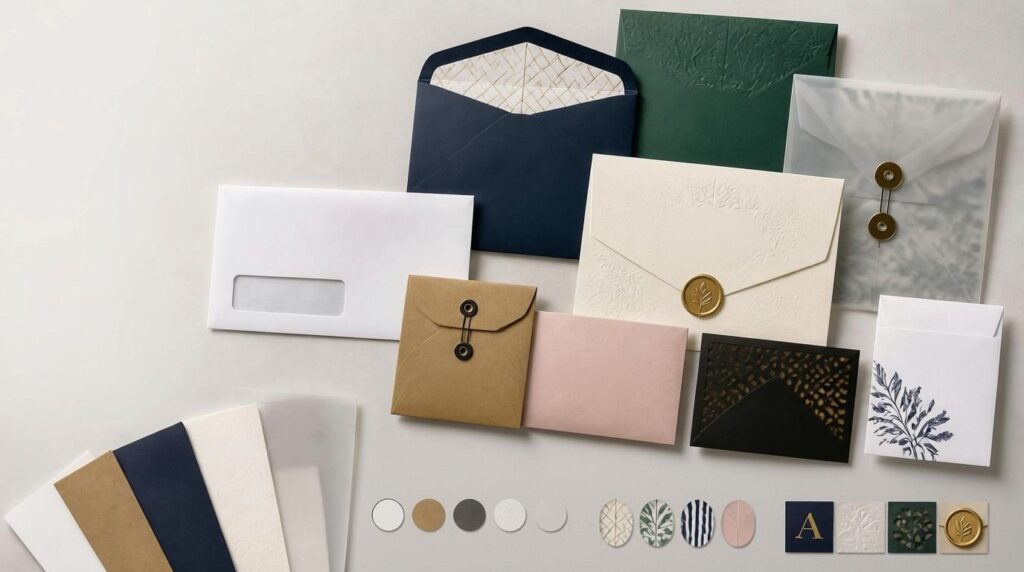
1. Standard white paper
A versatile option for invoices, letters, statements, and routine business correspondence. White paper offers a clean background for logos, text, and colored artwork.
2. Kraft paper
Kraft envelopes have a natural brown appearance that works well for understated branding, creative businesses, and brands seeking a natural aesthetic. Confirm the material’s actual recycled content and recyclability with your supplier.
3. Premium and textured paper
Heavier or textured paper stocks can create a refined feel for invitations, executive correspondence, event announcements, and premium brand communications.
4. Window envelope stock
Window envelopes feature a transparent panel that displays an address printed on the enclosed document. They are useful for invoices and statements, provided the address aligns correctly with the window.
Are eco-friendly printed envelopes available?
Recycled paper and appropriately sourced paper stocks can be considered when sustainability is a priority. However, environmental claims should be verified for the specific material and finished product.
If you want sustainable custom mailing envelopes, ask your supplier about recycled content, relevant certifications, coatings, adhesives, and local recycling compatibility.
Popular Printing Methods for Custom Envelopes
The best printing method depends on the quantity, artwork, material, color requirements, and budget.
| Printing method | Best suited for |
| Digital printing | Short runs, variable designs, and smaller campaigns |
| Offset printing | Larger quantities and consistent, repeatable print quality |
| Flexographic printing | Certain high-volume applications, depending on equipment and envelope construction |
Not every method is suitable for every envelope. Pre-made envelopes can have seams, flaps, and thickness variations that affect how they pass through printing equipment.
Before placing an order, ask for a recommendation based on your design and the exact envelope stock. For broader printing needs, explore commercial printing services.
Customization Options for Branded Custom Envelopes
Customization allows businesses to turn a functional mailing product into a recognizable part of their brand.
Here are some options to consider.
- Logo placement: Position your logo where it remains visible without interfering with mailing information.
- Brand colors: Use consistent colors that match your website, stationery, and packaging.
- Return address: Include accurate sender details to support professional communication and mail returns.
- Full-color artwork: Use illustrations, patterns, or campaign graphics where appropriate.
- Window designs: Select a window configuration that matches the address layout of the enclosed document.
- Special finishes: Depending on the stock and production process, options may include foil stamping, embossing, or selected coatings.
Keep the recipient’s address area, postage area, and other required mailing information clear. Postal rules vary by service and destination, so verify the applicable requirements before finalizing your artwork.
For a professional result, request a digital proof and, when appropriate, a physical sample before approving a large order.
How to Design Effective Printed Envelopes
A good envelope design balances branding with readability and practical mailing requirements.
Keep the layout simple
Avoid overcrowding the envelope with slogans, graphics, and unnecessary contact details. A clear logo, consistent colors, and readable typography can communicate your brand effectively.
Use print-ready artwork
Prepare your logo and artwork in a format accepted by your printer. A high-resolution PDF is often suitable, while vector artwork may be preferable for logos and sharp text. Follow the supplier’s specifications for bleed, color mode, fonts, and safe areas.
Test the finished envelope
Check the printed colors, address alignment, folds, seams, adhesive closure, and overall readability. If the envelopes will be processed by automated mailing equipment, confirm compatibility with the intended mailing process.
Match the design to your audience
A law firm may prefer restrained typography and neutral colors, while a retail brand may choose more colorful artwork for a promotional campaign. Your design should reflect both your brand personality and the purpose of the mail.
How to Order Custom Envelope Printing
A clear ordering process helps reduce errors and makes it easier to compare quotations.
- Define your purpose: Decide whether the envelopes will be used for business correspondence, invitations, invoices, or direct mail.
- Choose the size and material: Consider the contents, protection requirements, desired appearance, and postage implications.
- Prepare your design. Supply your logo, colors, return address, and any approved campaign artwork.
- Confirm quantity and printing options: Ask about available production methods, setup costs, minimum quantities, and finishing choices.
- Review the proof: Check spelling, artwork placement, address alignment, and color presentation before approval.
- Confirm production and delivery: Obtain a written quotation and estimated timeline based on your order specifications.
For help with your project, contact AttaPack to discuss your requirements.
Frequently Asked Questions About Custom Envelope Printing
1. What is the most common business envelope size?
The #10 envelope, measuring approximately 4.125 × 9.5 inches, is widely used for business letters, invoices, and statements in the United States.
2. Can I print my company logo on mailing envelopes?
Yes. Custom printed mailing envelopes can include logos, brand colors, return addresses, graphics, and approved promotional messaging, subject to the printer’s specifications.
3. What is the best paper for printed envelopes?
Standard white paper works well for everyday business communication. Kraft paper suits a natural look, while premium or textured stocks can be appropriate for invitations and upscale correspondence. The best choice depends on your budget, design, and mailing needs.
4. Are custom mailing envelopes suitable for marketing campaigns?
Yes. They can support direct mail campaigns, promotional offers, product announcements, catalogs, and customer outreach. Results depend on the audience, campaign design, offer, and mailing strategy.
5. Can I order envelopes in a custom size?
Custom sizes may be available depending on the supplier, envelope construction, production method, and order quantity. Confirm dimensions and any minimum order requirements before proceeding.
6. What artwork format should I provide?
A print-ready PDF is commonly accepted, and vector files such as AI or EPS may also be suitable. Always follow your printer’s file requirements and proofing instructions.
7. Are recycled paper envelopes available?
Recycled paper options are available from some suppliers. Ask for details about recycled content, certifications, coatings, and disposal guidance before making environmental claims.
8. How much does custom envelope printing cost?
Pricing depends on envelope size, paper stock, print coverage, quantity, finishing, setup, and shipping. Request a project-specific quotation to compare options accurately.
Final Thoughts
Choosing the right envelope involves more than selecting a size or adding a logo. Material, print quality, design, and mailing requirements all contribute to a successful result.
With thoughtful custom envelope printing, businesses can create professional correspondence, strengthen brand consistency, and support their direct mail campaigns. Whether you need everyday business envelopes or premium branded designs, start with a clear purpose and confirm the specifications before production.