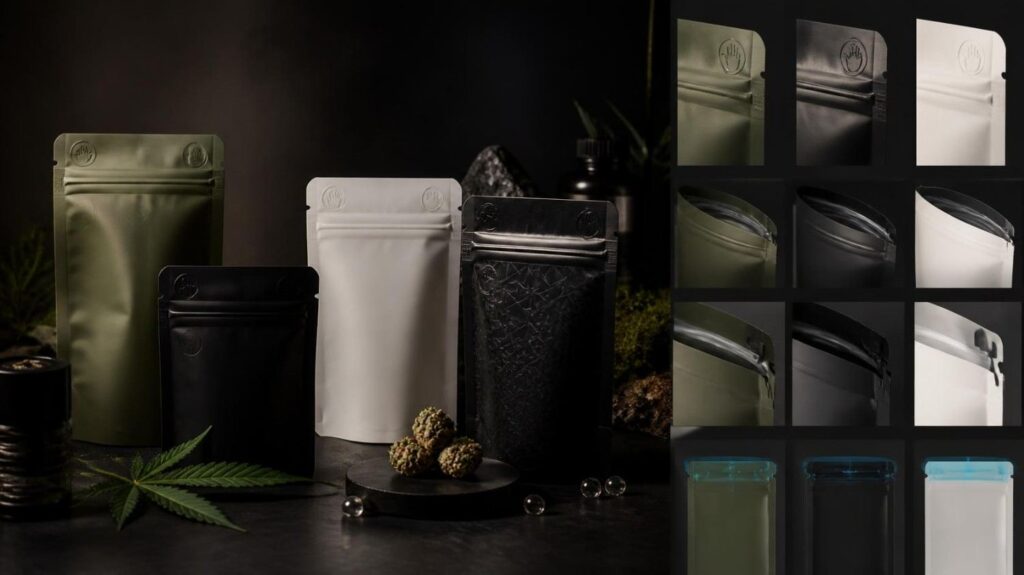
Packaging plays a critical role in protecting cannabis and pharmaceutical products, especially when those products may pose a risk to children if accidentally opened or consumed. For manufacturers, brands, and distributors, choosing the right child-resistant pouches is about more than creating a secure package. The packaging must also protect the product, support regulatory requirements, maintain usability, and provide a professional presentation.
Unlike ordinary flexible bags, child-resistant packaging is designed to make access difficult for young children while remaining reasonably accessible to intended adult users. Depending on the product and market, packaging may need to meet specific testing and regulatory requirements.
With numerous materials, closures, sizes, and customization options available, selecting the right pouch can feel complicated. This guide explains the key factors to consider when choosing child-resistant packaging for cannabis and pharmaceutical products.
Why Child-Resistant Pouches Matter
Cannabis products, medications, supplements, and other regulated products can require additional protection against accidental access. A properly designed pouch can create an important barrier between potentially hazardous products and children.
The right packaging can provide several benefits:
- Helps reduce the risk of accidental access
- Supports applicable child-resistant packaging requirements
- Protects products from moisture, light, oxygen, and contamination
- Provides tamper-evident features when required
- Makes products easier for adults to store and transport
- Creates space for product information, warnings, and branding
- Offers flexible packaging for different product shapes and quantities
However, child-resistant packaging should not be selected based only on appearance. Brands should verify that the complete packaging system meets the requirements applicable to their product and target market.
Key Factors to Consider When Choosing Child-Resistant Pouches
1. Understand Your Product Requirements
Start by evaluating the product that will go inside the pouch. Cannabis flower, edibles, capsules, tablets, powders, and other products can have very different packaging needs.
Consider:
- Product type
- Product size and weight
- Moisture sensitivity
- Oxygen sensitivity
- Light sensitivity
- Shelf-life requirements
- Potential leakage or contamination
- Storage and transportation conditions
For example, a moisture-sensitive pharmaceutical product may require a stronger barrier structure than a product that is relatively stable in normal conditions.
Understanding the product first helps you select appropriate materials, pouch dimensions, and closure systems.
2. Check Child-Resistance Requirements
One of the most important considerations is whether the packaging has been properly tested and certified for the intended application.
A pouch marketed as “child-resistant” is not automatically compliant with every regulation or jurisdiction. Requirements can vary depending on the country, product category, package type, and intended use.
Before placing an order, ask your packaging supplier for documentation regarding applicable child-resistance testing. Also determine whether your product requires additional features such as tamper evidence or special labeling.
For regulated cannabis and pharmaceutical products, businesses should review the rules that apply to their specific market rather than relying solely on general packaging claims.
3. Select the Right Barrier Material
Material selection directly affects product protection. Compliant packaging bags may use multiple layers to create barriers against environmental factors.
Common packaging considerations include resistance to:
- Moisture
- Oxygen
- Light
- Odors
- Chemicals
- Punctures and tears
Multi-layer laminated structures are often used when stronger barrier performance is required. The ideal structure depends on the product’s formulation, shelf-life expectations, filling process, and storage environment.
A packaging specialist can help determine whether a standard flexible film or a higher-barrier laminate is more suitable.
4. Choose a Reliable Child-Resistant Closure
The closure is one of the most important components of a child-resistant pouch. Different pouch systems may use specialized zippers, press-to-close mechanisms, or other access-control designs.
The packaging should make unauthorized or accidental access difficult while allowing the intended adult consumer to open and close it without excessive difficulty.
A good closure should also maintain its performance throughout the expected product life. If the pouch is designed to be resealable, repeated opening and closing should not compromise the package’s protective properties.
5. Consider Tamper-Evident Features
A child-resistant feature is intended to make the package difficult for children to open. Tamper-evident packaging, on the other hand, helps indicate whether a package has been opened or interfered with before reaching the consumer.
Depending on the product and regulations, you may consider features such as:
- Tear-away seals
- Tamper-evident bands
- Sealed openings
- Perforated sections
- Specialized security features
Your packaging requirements should be determined based on your product category and applicable regulations.
Choosing the Right Pouch Size
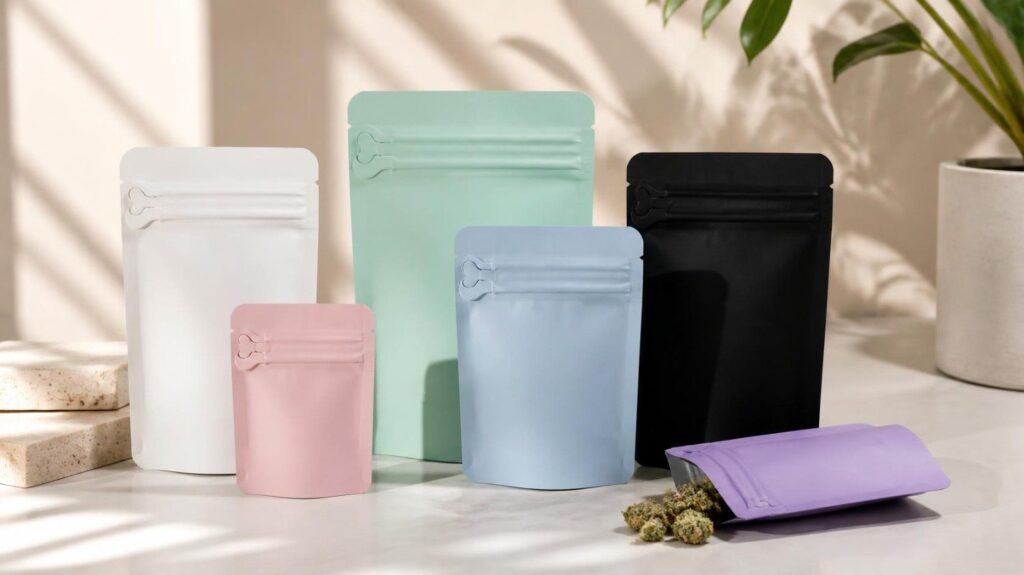
Size matters for both protection and presentation. A pouch that is too large may waste material and create unnecessary space, while one that is too small can compromise sealing and product protection.
Before selecting pouch dimensions, determine:
- Product volume
- Product weight
- Fill level
- Required headspace
- Seal area
- Labeling requirements
- Transportation considerations
For cannabis products, pouch sizes may vary significantly depending on whether the package contains flower, pre-rolls, edibles, or other products. Pharmaceutical applications can also require compact pouches for individual doses or larger formats for multiple units.
Customization Options for Cannabis and Pharma Brands
Packaging is also an important branding tool. Custom pouches allow companies to create packaging that aligns with their visual identity while incorporating important product information.
Customization options may include:
- Printed logos
- Brand colors
- Product information
- Regulatory warnings
- Usage instructions
- Batch or lot information
- Barcodes and QR codes
- Matte or glossy finishes
- Custom pouch shapes and sizes
For regulated products, branding must always work alongside required labeling and compliance information. Decorative elements should never make important warnings, dosage information, or instructions difficult to read.
Material Strength and Durability
Flexible packaging needs to withstand handling throughout filling, transportation, storage, and consumer use.
A high-quality pouch should resist common forms of damage such as:
- Puncturing
- Tearing
- Abrasion
- Seal failure
- Compression damage
Cannabis and pharmaceutical products can pass through multiple stages before reaching consumers. Weak packaging may lead to damaged products, leakage, contamination, or customer complaints.
When comparing packaging options, consider the entire supply chain rather than only how the pouch performs on a retail shelf.
Moisture and Odor Protection
Some cannabis and pharmaceutical products can be affected by environmental exposure. Moisture may alter product quality, while certain products can release or absorb odors.
For cannabis packaging in particular, odor control may be an important consideration. Depending on the product, packaging may need to provide an effective odor barrier while also maintaining required child-resistant characteristics.
Pharmaceutical products may have different requirements, so the material should be selected according to the formulation and stability profile.
Ease of Use for Adult Consumers
Consumers need to understand how to open and close the package. Instructions should be clear and easy to follow. If the pouch is resealable, the closure should provide noticeable feedback when properly closed.
Consider testing the packaging with your intended consumer group to evaluate:
- Opening difficulty
- Closing performance
- Instruction clarity
- Grip and handling
- Resealability
- Overall convenience
User testing can reveal practical problems before the packaging reaches the market.
Sustainability Considerations
Sustainability is becoming increasingly important in flexible packaging. Brands may want to reduce material usage, improve recyclability, or choose packaging structures with a lower environmental impact.
However, sustainability goals must be balanced with safety, barrier performance, durability, and regulatory requirements.
Ask your supplier about available material structures and whether alternative films can meet the necessary performance requirements. Avoid selecting a material solely because it is marketed as environmentally friendly if it cannot provide the protection your product requires.
Why Custom Packaging Can Be a Better Choice
Standard packaging may work for some applications, but custom packaging can provide a better fit when a product has specific safety, sizing, or branding requirements.
Custom designs can help brands optimize:
- Pouch dimensions
- Material structure
- Closure style
- Barrier performance
- Printing
- Product visibility
- Tamper evidence
- Storage and transportation
For regulated industries, customization should be approached carefully. The packaging design should support compliance rather than treating regulatory information as an afterthought.
Conclusion
Choosing the right child-resistant pouches requires more than selecting a bag with a secure closure. Cannabis and pharmaceutical brands need to consider child-resistance testing, barrier performance, material strength, size, tamper evidence, usability, labeling, and applicable regulations.
The right packaging can help protect the product, support regulatory objectives, improve consumer confidence, and strengthen brand presentation. Working with an experienced packaging supplier can also make it easier to identify the appropriate materials, closure systems, and customization options.
For businesses looking for reliable packaging solutions, AttaPack offers customizable pouch options designed to meet the varied needs of modern product brands.
Frequently Asked Questions
What are child-resistant pouches?
Child-resistant pouches are flexible packages designed with specialized access mechanisms that make them difficult for young children to open while remaining accessible to intended adult users. Their exact testing and compliance requirements depend on the product and market.
Are child-resistant pouches required for cannabis products?
Requirements vary by jurisdiction and cannabis product type. Many markets have specific packaging rules for cannabis products, so businesses should verify the regulations applicable to their location and product before selecting packaging.
Can pharmaceutical products use child-resistant pouches?
Yes. Pouches can be used for certain pharmaceutical and healthcare products when their material, closure, barrier properties, and design are appropriate for the product and meet applicable requirements.
What materials are used for child-resistant packaging?
Materials vary depending on the application. Flexible pouches may use single-layer or multi-layer films and laminates designed to provide properties such as moisture, oxygen, light, odor, puncture, or tear resistance.
Can child-resistant pouches be customized?
Yes. Depending on the supplier and design, custom pouches can include different dimensions, materials, printing, finishes, closures, and other packaging features.