Choosing the right packaging is one of the most important decisions for any business. The packaging not only protects your product but also represents your brand. When comparing folding cartons vs. corrugated boxes, many businesses feel confused about which option suits their needs.
Both are popular packaging box types, but they serve different purposes. Understanding their differences can help you reduce costs, improve product safety, and enhance customer experience.
We’ll break down everything you need to know about corrugated packaging and folding carton boxes so that you can make the best choice for your product.
What Are Corrugated Boxes?
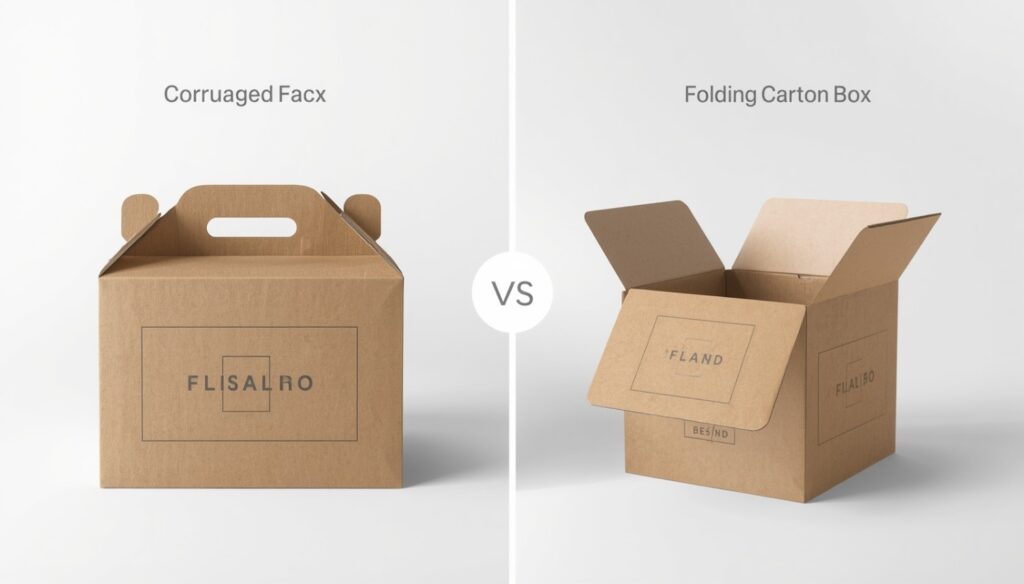
A corrugated box is made from three layers of paper: two flat outer liners and a wavy, fluted inner layer. This fluted middle layer is what gives corrugated packaging its signature strength and rigidity. You’ve seen these countless times — they’re the brown shipping boxes that arrive on your doorstep.
Corrugated packaging is the backbone of the global logistics industry. It’s built to absorb impact, stack weight, and endure long-distance shipping without compromising what’s inside.
Key Features of Corrugated Packaging
- High durability and strength
- Excellent protection for heavy items
- Cushioning against impacts
- Suitable for long-distance shipping
- Recyclable and eco-friendly
Common Uses
Corrugated boxes are widely used for:
- Shipping and logistics
- E-commerce packaging
- Heavy or fragile items
- Bulk storage
What Are Folding Carton Boxes?
A folding carton is made from a single layer of paperboard, typically SBS (solid bleached sulfate) or CRB (coated recycled board). These are the elegant boxes you find on retail store shelves: cereal boxes, cosmetic packaging, pharmaceutical cartons, and food product boxes.
Folding carton boxes are designed for presentation. They’re lightweight, smooth, and printable with high-resolution graphics, making them the go-to choice for retail packaging where shelf appeal matters.
Key Features of Folding Carton Boxes
- Lightweight and cost-effective
- Easy to customize with printing
- Attractive presentation
- Suitable for branding and marketing
- Easy to store and assemble
Common Uses
Folding carton boxes are ideal for:
- Food packaging
- Cosmetics
- Pharmaceuticals
- Retail products
Folding Carton vs Corrugated Box: Key Differences
Understanding the difference between a folding carton and a corrugated box is essential for selecting the right packaging.
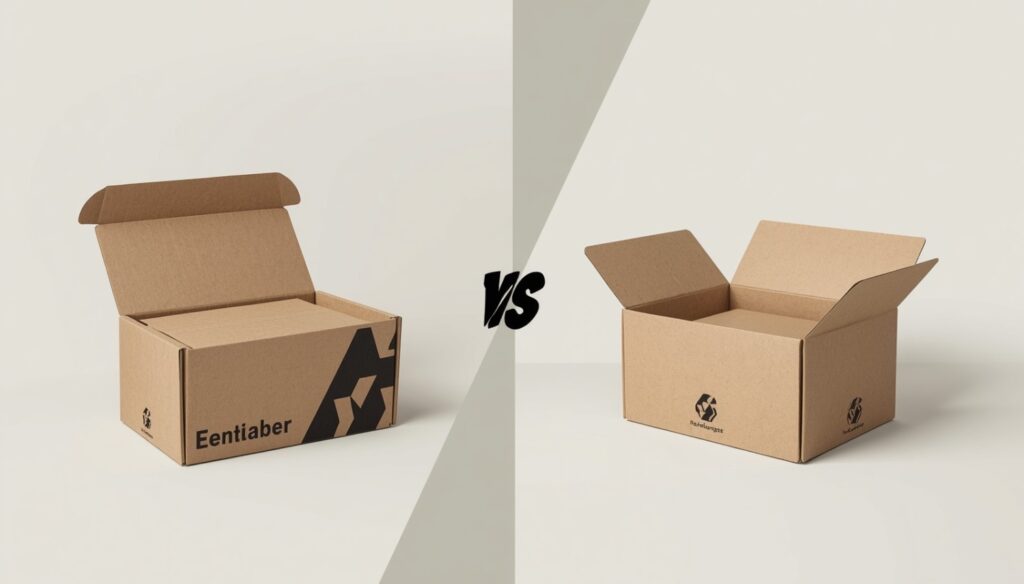
1. Material Strength
- Corrugated Boxes: Strong and durable due to fluted layers
- Folding Cartons: Lightweight and less durable
If your product is heavy or fragile, corrugated packaging is the better option.
2. Product Protection
- Corrugated Packaging: Provides excellent protection during shipping
- Folding Carton Boxes: Offers basic protection, mainly for display
For shipping long distances, corrugated boxes are more reliable.
3. Branding and Appearance
- Folding Cartons: Best for high-quality printing and branding
- Corrugated Boxes: Limited printing options (unless upgraded)
For retail shelves, folding carton boxes look more attractive.
4. Cost Comparison
- Corrugated Boxes: Slightly more expensive due to durability
- Folding Cartons: More affordable for lightweight products
If you need cost-effective packaging for small items, folding cartons are ideal.
5. Storage and Handling
- Folding Cartons: Easy to store flat and assemble quickly
- Corrugated Boxes: Bulkier but still stackable
Folding cartons are better for saving storage space.
6. Environmental Impact
Both types are packaging eco-friendly:
- Made from recyclable materials
- Can be reused in many cases
Corrugated packaging often contains more recycled content.
| Feature | Corrugated Box | Folding Carton |
| Material | 3-ply fluted board | Single-layer paperboard |
| Strength | High | Moderate |
| Print quality | Good | Excellent |
| Weight | Heavier | Lightweight |
| Best for | Shipping & logistics | Retail & direct-to-consumer |
| Cost | Moderate–High | Low–Moderate |
| Customization | Limited shapes | High — die-cuts, embossing |
| Eco-friendly | Yes | Yes |
When to Choose Corrugated Packaging
Corrugated packaging is the best choice when your product requires strong protection during storage and shipping, especially if it is heavy, fragile, or needs to travel long distances. Its durable, multi-layered structure helps absorb shocks and prevents damage, making it ideal for e-commerce Boxes, bulk shipments, and industrial goods.
You should also choose corrugated packaging when stacking strength is important, as it can withstand pressure without collapsing, ensuring your products remain safe throughout the supply chain.
When to Choose Folding Carton Boxes
Folding carton boxes are the right choice if:
- Your product is lightweight
- You need attractive retail packaging
- Branding is a priority
- You want cost-effective packaging
- Your product is displayed on shelves
Example Products
- Food items
- Cosmetics
- Medicines
- Small retail goods
Can You Use Both Together?
Yes, many businesses use both packaging types together for maximum benefit.
Common Strategy
- Folding carton box → For retail presentation
- Corrugated box → For shipping protection
This combination ensures:
- Attractive branding
- Safe delivery
- Better customer experience
How to Choose the Right Packaging for Your Product
Here are some simple steps to decide:
1. Consider Product Weight
Heavy items → Corrugated
Light items → Folding carton
2. Think About Shipping Needs
Long-distance shipping → Corrugated
Local retail → Folding carton
3. Focus on Branding
Need premium look → Folding carton
4. Budget Planning
Low budget → Folding carton
High protection → Corrugated
5. Customer Experience
Unboxing matters → Use both
Advantages and Disadvantages
Corrugated Packaging
| Pros | Cons |
| Strong and protective | Less visually appealing |
| Ideal for Shipping | Slightly higher cost |
| Durable |
Folding Carton Boxes
| Pros | Cons |
| Attractive and customizable | Less Durable |
| Lightweight | Not ideal for heavy items |
| Cost- effective |
Future Trends in Packaging
The packaging industry is evolving with new trends:
- Eco-friendly materials
- Minimalist packaging design
- Smart packaging solutions
- Custom branding options
Both corrugated packaging and folding carton boxes are adapting to these trends, making them more sustainable and innovative.
Conclusion
When comparing a folding carton vs corrugated box, there is no one-size-fits-all answer. The right choice depends on your product, budget, and business goals.
- Choose corrugated boxes for strength and protection
- Choose folding carton boxes for branding and presentation
For many businesses, using both types together provides the best results.
By understanding these packaging box types, you can improve product safety, reduce costs, and enhance your brand image.
FAQs
1. What is the difference between corrugated and folding carton?
A corrugated carton is made with thick, layered material that has a fluted/wavy sheet inside. It is strong and mainly used for shipping, storage, and heavy products. A folding carton is made from paperboard and is lighter. It is commonly used for retail packaging like cosmetics, medicines, food items, and small products.
2. What is the difference between cartons and corrugated boxes?
A carton usually refers to a lightweight paperboard box used for product packaging. A corrugated box is stronger and made with multiple layers, including a wavy inner layer. Corrugated boxes are mostly used for shipping and protecting products during delivery.
3. What are the disadvantages of folding box board?
Folding box board is lightweight, so it is not suitable for very heavy products. It can get damaged by water or moisture if not coated properly. It also provides less protection compared to corrugated packaging, especially during long-distance shipping.
4. What is another name for a corrugated box?
Another common name for a corrugated box is a shipping box or cardboard box. It is also sometimes called a corrugated carton.
5. What is a folding carton?
A folding carton is a lightweight paperboard box that is cut, folded, and printed for product packaging. It is commonly used for items like food, cosmetics, medicines, electronics accessories, and retail products.